







Pregnancy and motherhood bring wonderful changes, but also noticeable physical changes to women’s bodies. Whether you’re preparing calmly for your pelvic floor training or watching your skin stretch over the months, taking care of yourself becomes an absolute priority. Among the most common cosmetic concerns, the appearance of fine skin lines raises a frequent question: how to get rid of stretch marks effectively and naturally? Although these marks are completely normal and common, there are practical solutions to deeply hydrate the dermis, stimulate collagen and preserve your skin’s suppleness.
- Understanding the pathophysiology of stretch marks: these marks affect between 80% and 90% of pregnant women and develop from a reddish-purple phase to a white scar-like phase over a period of 1 to 2 years.
- Choosing effective natural remedies: regular use of plant oils (sweet almond, rosehip, fenugreek), aloe vera or flax seeds helps nourish the dermis and prevent the rupture of elastic fibres.
What is a stretch mark and how does it form?
Stretch marks are fine scar-like skin lines that appear when the skin tissue is stretched too much or too quickly. When they first appear, during the formation phase, they take on a reddish-purple or pink colour, a sign of active inflammation in the dermis.
Over time, usually after 1 to 2 years, these marks fade and become white and pearly. At this stage, the stretch marks are established on the skin in a lasting and permanent way.
This skin condition is extremely common. In fact, it affects between 80% and 90% of pregnant women. Stretch marks mostly appear during the second and third trimesters of pregnancy.
Where can you get stretch marks?
They are mainly found in areas subject to high mechanical tension:
- the belly,
- the breasts,
- the hips,
- the thighs,
- the buttocks.
What is the pathophysiology of pregnancy stretch marks?
The development of stretch marks is explained by a combination of mechanical and hormonal factors. During motherhood, hormonal changes profoundly alter skin structure.
The increase in hormones, especially glucocorticoids, directly slows the production of collagen and elastin. Yet these two proteins are essential to ensure the skin’s strength, suppleness and elasticity. Without a sufficient supply, the dermal structure weakens considerably, while the skin becomes thinner and more sensitive.
At the same time, the gradual and rapid increase in the size of the breasts, belly, hips and thighs places intense mechanical tension on the skin. Under the effect of this major stretching, the elastic fibres in the dermal tissue eventually break, giving way to stretch marks. This process is closely linked to the upheavals of the postpartum period, during which the body begins its recovery phase.

How to get rid of stretch marks: what treatments are there and why prevention matters
A crucial question often comes up: how to get rid of stretch marks once they are white? It’s important to be factual and realistic: once they have become permanent, stretch marks are particularly difficult to remove. There is no miracle treatment that will make them disappear completely, 100%.
That’s why setting up a prevention routine from the very start of pregnancy is essential to limit the risk of elastic fibre rupture. By adopting the right everyday habits, keeping skin well hydrated and regularly massaging the areas at risk, you boost skin elasticity.
What natural remedies can you use to reduce and prevent stretch marks?
Fortunately, several natural remedies, rich in fatty acids, vitamins and antioxidants, can be precious allies for nourishing the skin and stimulating cell regeneration.
Sweet almond oil to nourish deeply
Sweet almond oil is globally recognised for its high content of essential fatty acids. This natural treatment penetrates the dermis to intensely nourish the skin, strengthen the skin barrier and limit dehydration. Thanks to its softening and smoothing properties, it preserves skin suppleness, making tissues more resistant to major stretching. To use it, apply a few drops of oil to the thighs, hips, belly or buttocks, then massage gently using regular circular movements until fully absorbed.
Rosehip oil to stimulate collagen
A true repairing treasure, rosehip oil is ideal for caring for skin affected by stretch marks. Its richness in essential fatty acids gives the skin remarkable suppleness. Its regenerating properties soothe and repair even the most delicate skin.
In addition, its natural concentration of vitamins E and K gives it a powerful antioxidant effect that actively stimulates collagen production and helps prevent skin laxity. Finally, the carotenoids in its formula support microcirculation, helping to reduce the visible appearance of skin scars. Apply a few drops to the affected areas and give a careful massage using the pinch-and-roll technique for several minutes.
Fenugreek oil to preserve firmness
Extracted from nutrient-rich seeds, fenugreek oil is packed with vitamins (A, B1, C) and key trace elements such as iron, magnesium and calcium. This unique nutritional profile provides intense nourishment and gives skin tissue the elements it needs for regeneration.
Thanks to the presence of flavonoids and powerful antioxidants, it actively fights free radicals and protects the skin against premature ageing and loss of firmness. Fenugreek oil helps maintain skin tone, which helps prevent the appearance of new lines. You can use it pure or dilute it in another carrier plant oil, such as olive or argan oil, before massaging the area with circular movements.
Aloe vera to hydrate and calm inflammation
Aloe vera gel is an essential natural remedy thanks to its exceptional richness in minerals and vitamins A, C and E. It provides optimal hydration immediately, a key factor in maintaining skin elasticity and minimising the impact of mechanical tension.
Aloe vera also has the ability to stimulate collagen synthesis, thereby speeding up skin repair and reducing the width of existing marks. Its soothing and anti-inflammatory properties are particularly effective for calming redness and discomfort from recent stretch marks (the formation phase). Simply massage a small amount of gel gently onto the belly, breasts or thighs every day.
Flax seeds for a lifting and regenerating effect
Flax seeds are rich in vitamins B and E, zinc, iron and magnesium, and contain a high proportion of omega-3s that soothe inflammation and stimulate tissue regeneration. Thanks to their natural mucilage, they have a subtle lifting effect, deeply hydrate and restore radiance to the skin.
To benefit from them, prepare a poultice: steep 40 grams of ground flax seeds in boiling water for about 15 minutes. Once the mixture has cooled to lukewarm, apply it to clean, damp skin. Leave it on for a few minutes so the active ingredients can penetrate the dermis, then rinse with lukewarm water.
Taking care of your body postpartum
Taking care of your body after childbirth goes far beyond the visible marks on your skin. As women, we naturally tend to focus our efforts on what we see in the mirror: changes in our figure, the look of our skin or the fading of stretch marks.
Yet the real foundation of our physical well-being and everyday comfort is out of sight. It’s our pelvic floor, this set of invisible but oh-so-essential muscles that supports all our organs and undergoes significant pressure during pregnancy and childbirth. Caring for yourself postpartum means taking a holistic approach to your health without neglecting this intimate part of your anatomy.
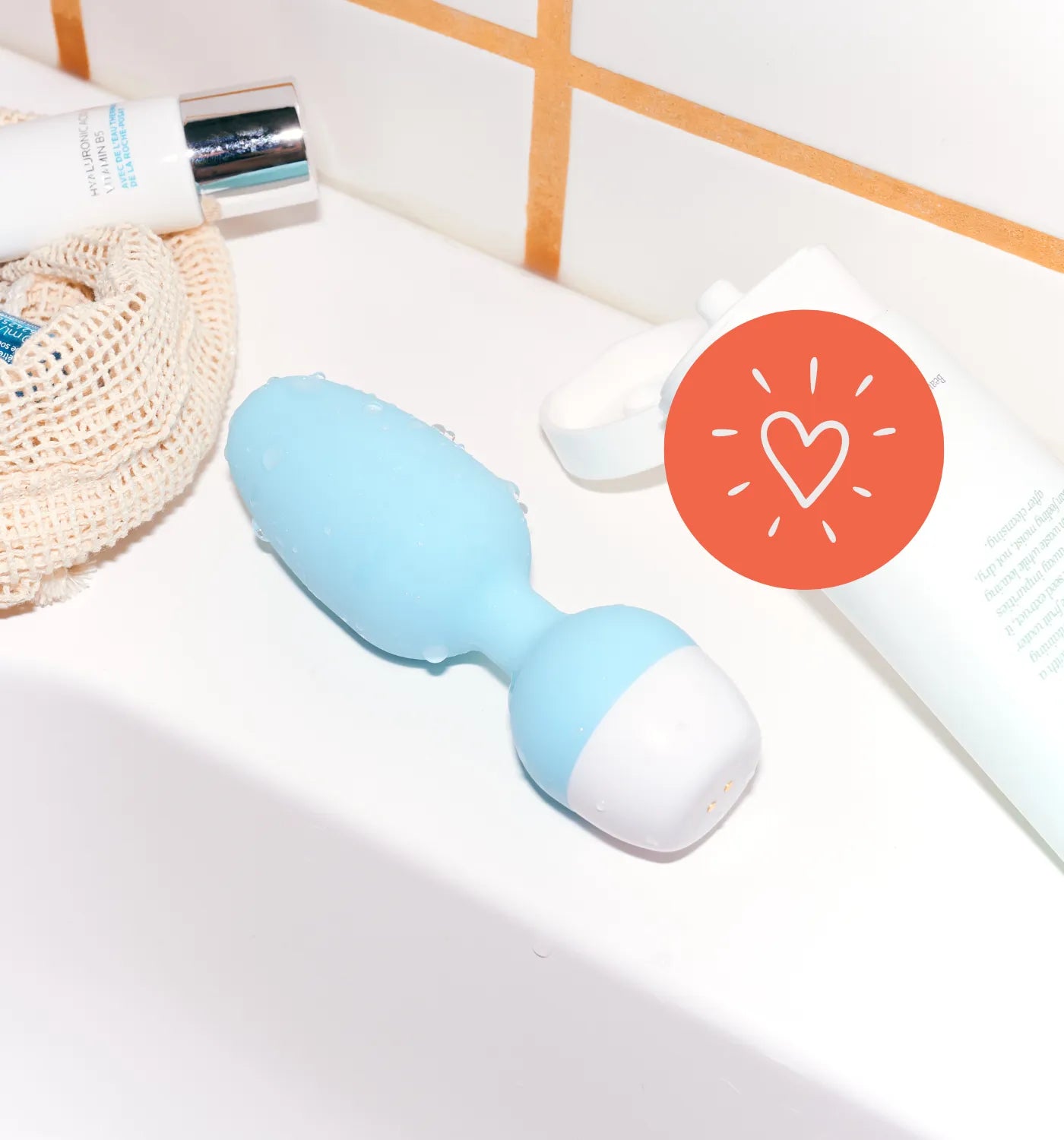
That’s where our Emy Trainer solution comes in to support you. Designed by medical experts, this smart pelvic floor trainer lets you strengthen your pelvic floor directly at home, at your own pace (as early as 7 weeks after childbirth).

Thanks to a fun mobile app and personalised biofeedback exercises, you take back control of your body in just a few minutes a day. Emy Trainer turns pelvic floor training into a simple, effective ritual, helping you reconnect with your body and preserve your long-term well-being.
FAQ: Answers to your questions about stretch marks
Can white stretch marks be removed permanently?
No, it is not possible to completely make white stretch marks disappear. At this stage, a stretch mark is a permanently established scar where the collagen and elastin fibres have broken down. However, regular application of regenerating oils such as rosehip can improve the skin’s texture, make it more supple and visually reduce their appearance.
When should you start applying anti-stretch-mark care during pregnancy?
It is recommended to start caring for your skin from the first trimester of pregnancy. In fact, clinical studies show that nearly 45% of stretch marks appear before the 24th week of amenorrhea, well before the belly becomes noticeably rounded. Early hydration prepares skin elasticity for the mechanical tension to come.
Is massage mandatory to reduce stretch marks?
Yes, massage is a key part of prevention and treatment. Circular movements or the pinch-and-roll method stimulate local microcirculation and promote deep penetration of plant-based active ingredients (vitamins, fatty acids). Mechanical massage also helps stimulate fibroblasts, the cells responsible for collagen production.
What you should remember to care for your skin
In short, the appearance of stretch marks is a natural process that affects the vast majority of women during their lives. While there is no miracle solution to completely erase established marks, an early and caring routine makes all the difference. What matters most is accepting yourself as you are, with kindness and softness. Every woman is beautiful, with or without stretch marks.
- Early prevention is key: acting from the start of pregnancy helps support skin elasticity in the face of hormonal changes and tissue stretching.
- Nature offers excellent remedies: sweet almond, rosehip and fenugreek oils, aloe vera gel and flax seeds nourish the dermis deeply.
- Take care of your intimate health: beyond the visible marks on your skin, caring for your health and well-being also means looking after your pelvic floor, which you can strengthen effectively at home thanks to the Emy Trainer smart pelvic floor trainer.
Sources


