





We often work our abs to have a flat stomach but we don't take care of our perineum only when we notice more or less significant urinary leakage. However, the perineum, just like the abs, is to be worked regularly with rehabilitation because it’s a very important set of muscles, even if you can’t see it! We explain why.
What is the perineum for?
The perineum is a region that is often overlooked but is so essential for our health! It is a set of muscles, ligaments and tissues which form a real muscular floor at the bottom of the pool.

This muscular strap holds our genitals in place such as the bladder, the uterus in women and the rectum. The perineum therefore plays a vital role in functions as vital as evacuation of urine and stools.
But that's not all! Thanks to its tone, the perineum also participates in pelvic static by supporting the weight of the viscera. A toned and muscular perineum thus prevents problems of organ descent or urinary incontinence and anal.
Finally, this region intervenes in the sexual function in particular by allowing good vascularization during intercourse. A healthy perineum is therefore essential to preserve our quality of daily life.

When to start perineal rehabilitation?
Throughout their lives, women are exposed to factors that can worsen the condition of their perineum:
- pregnancies and childbirth ;
- the practice of certain impact sports;
- menopause...
We therefore find key moments during which women generally begin their rehabilitation.
After childbirth
During pregnancy and childbirth, the perineum undergoes significant stress and can be weakened or even damaged in cases of episiotomy or tears. A postpartum perineal rehabilitation helps strengthen these muscles and prevent problems such as urinary or anal incontinence and organ descent (prolapse).

When menopause arrives
With menopause, the drop in rates estrogen leads to sagging of the tissues and a loss of tone of the perineum. Rehabilitation helps maintain a toned perineum for avoid urinary leakage and pelvic floor disorders.
In case of trouble
There perineal rehabilitation is recommended in cases of urinary leakage, anal incontinence, pain during intercourse, prolapse or descent of organs. It allows to re-muscle the perineum and regain good continence.
For a toned perineum
Even without any particular problems, regularly re-educate your perineum by prevention will help maintain strong and toned pelvic muscles, essential for the proper support of the organs and the maintenance of a good quality of life.
Perineum: why do rehabilitation?
Certain everyday gestures can impact and weaken the perineum, hence the importance of rehabilitation, even if you do not have urinary leakage or specific problems related to your pelvic floor.
Preventing incontinence of any kind
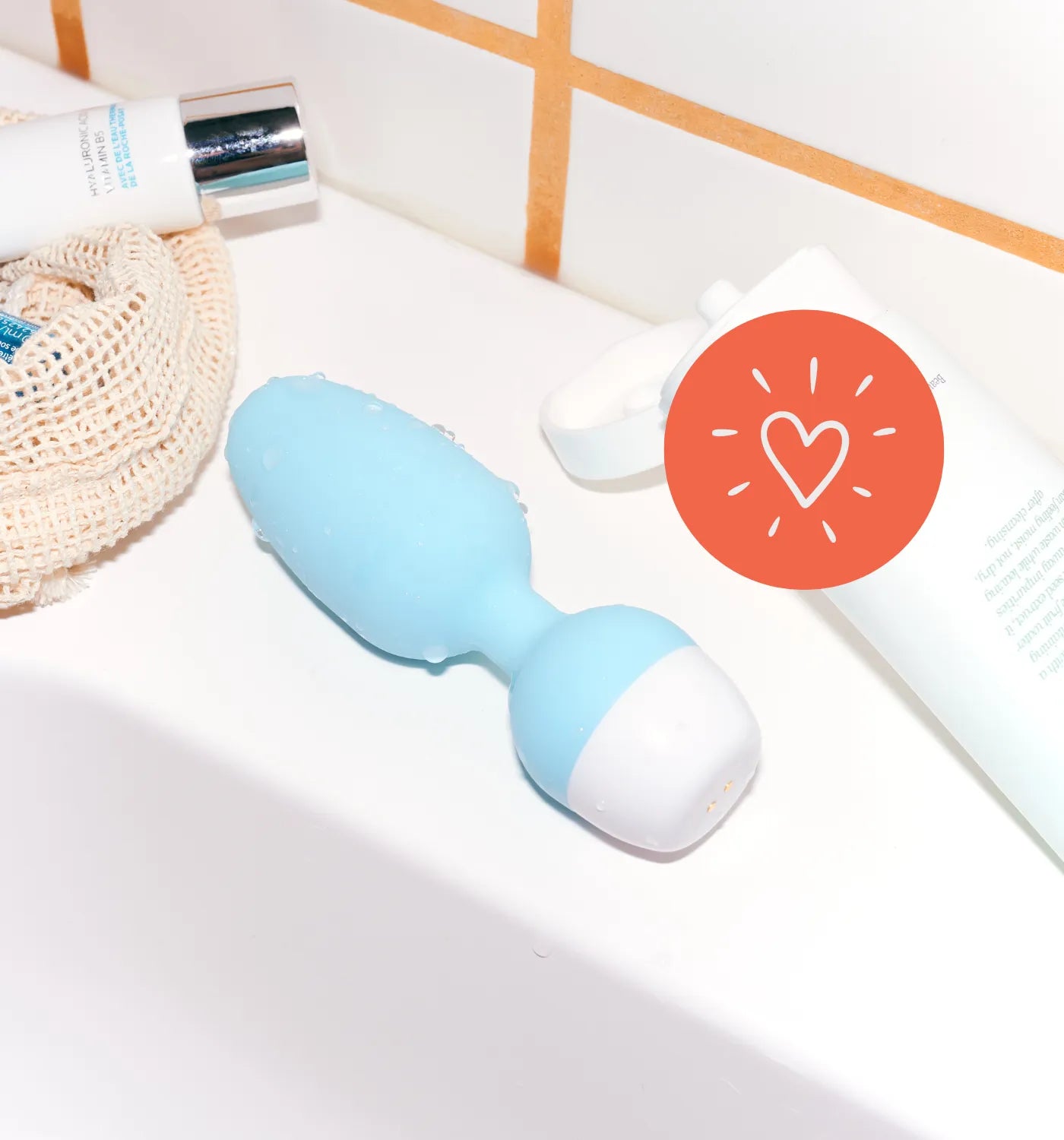
The risk of incontinence, whether urinary or fecal, can affect any woman at any age. Continue rehabilitation of the perineum throughout its life is therefore important to prevent these leaks. There are also devices to stay motivated to do rehabilitation exercises over time, such as the Emy probe.

It allows you to tone your perineum alone at home, at the time that suits you most. So it’s you who decide where and when to do your perineal rehabilitation!
Learn more about the Emy probe
Boost your sex life, the icing on the cake!
The perineum also plays an essential role in thriving in its health sex life. Many women have noticed a improvement in their sexual relations when the perineum is more muscular.
For what ? Quite simply because who says more muscular perineum, says compression of the clitoris and therefore, best feelings ! In addition, the vaginal contractions being more intense, the penis is tighter... Winning combo!
Eavoid aches and pains
The perineum can be the cause of different ailments but the link between this pain and the perineum is not always obvious since it is a complex set of muscles that we do not talk about enough.
To avoid this, it is essential to do regularly of the rehabilitation exercises to take care of it. Here is a (non-exhaustive) list of ailments that can be linked to a unhealthy perineum.
Back pain
A good posture helps protect the organs of the small pelvis which rest on the perineum. If you have poor posture, pressure on these organs can cause complications on the perineum in the long term and even be responsible for the occurrence of a prolapse.

Pelvic pain
THE pelvic pain correspond to pain located in the area which is located under the abdomen and between the pelvic bones. Whatever the cause of the pain, perineal rehabilitation can prove to be an effective solution to treat these ailments.
Sexual pain
Thanks to relaxation techniques, perineal rehabilitation can also help reduce pain felt during sexual intercourse. Certain exercises allow you to better know when and how to contract and relax your perineum during penetration.
Of course, we can never tell you this enough but if you experience this pain, the first reflex to have is to consult your doctor or gynecologist who will be able to guide you towards the best solution.
How long does perineal rehabilitation take?
As you will have understood, the duration of perineal rehabilitation is very variable and depends on several factors.
In the context of pregnancy
Ideally, it is recommended to start the strengthening exercises from the end of pregnancy to prepare the muscles for childbirth.
After childbirth, the resumption of rehabilitation generally takes place between the 6th and 8th week postpartum, once the afterbirth completed.

The duration of this post-natal rehabilitation then varies depending on the condition of the perineum and the availability of the patient. On average, a cycle of 10 to 20 rehabilitation sessions weekly or bi-weekly is recommended. This represents approximately 3 to 6 months of follow-up in a medical office.
In fact, very few women manage to respect this pace because it is very not very compatible with the busy life of a young mother.
The important thing to remember is that the rehabilitation period can be shortened if good results are felt quickly. This is generally the case when in-office rehabilitation exercises are accompanied by home exercises.

However, postnatal rehabilitation can also be longer if difficulties or problems persist.
In case of pelvic disorders
For women suffering from urinary problems or prolapse, more intensive muscle strengthening on 6 months to 1 year is often necessary before significant improvements can be achieved.
In this case, in-office sessions with a specialized physiotherapist are supplemented by home sessions as allowed for example by the Emy medical device.
Learn more about the Emy probe

At menopause
Perineal rehabilitation can also be spread over several years at menopause to compensate for the loss of tone. Ultimately, the key lies in regularity and perseverance pelvic floor strengthening exercises. A perineum used regularly will maintain all its tone, whatever the period of a woman's life.
Perineum: how to do rehabilitation?
Rehabilitation of the perineum is mainly done through contraction exercises pelvic muscles, called Kegel exercises. These contractions consist of contract, hold for a few seconds then relax the muscles of the perineum. They are to be renewed several times in a row, by adapting the duration of contraction.
There exists several methods to carry out perineal rehabilitation and the 3 most common are:
- manual perineal rehabilitation;
- rehabilitation by electrostimulation;
- biofeedback rehabilitation.
THE advantages and disadvantages of each of these methods are detailed in our article on this subject.
Furthermore, accessories and devices designed for home use can also help you feel your perineum better and, above all, to visualize your contractions for more efficiency in your rehabilitation.

In particular, the probe Emily can be a simple, accessible and ergonomic alternative for doing your perineal rehabilitation at home.