






The pelvic floor lies behind a range of health problems, such as organ prolapse. This condition, also called prolapse, can show up through low back pain among its warning signs.
The link between low back pain and the pelvic floor
Dr Marine Lallemant, a gynaecologist specialising in pelviperineology, gives us some pointers for better understanding the link between prolapse and low back pain.
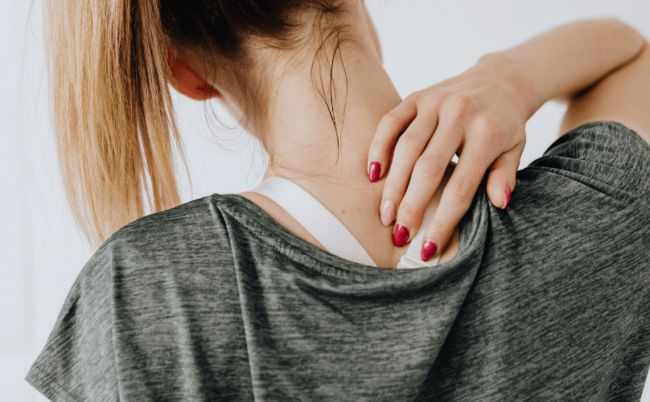
Low back pain
According to the French health insurance service, 4 out of 5 French people will suffer from low back pain during their lifetime and, over the last twelve months, more than half the French population has had an episode of back pain.
Lumbago, which literally means "pain in the lower back", can be short-lived or last a long time, and can have many origins. In every case, the pain influences our posture and the way we move.
Our back is indeed subject to strain, both during the day through everyday activities and at night through a lying position held for several hours.
So take note: your low back pain can be due to factors as varied as they are numerous. And it may be that your pelvic floor is one of the causes. So if you have the slightest doubt, do not hesitate to talk about it with your doctor or a healthcare professional.
Posture, back pain and the pelvic floor
The pelvic floor sits in the pelvis and surrounds the rectum, the vagina and the bladder. It stretches from the pubis at the front to the coccyx at the back, and is far more essential than people think. Depending on our posture, the forces applied to the pelvic floor are not the same:
When we stand upright, the pressure exerted by gravity and by the diaphragm is a vertical pressure, which the pelvic floor compensates for when it has good tone.
In the second case, however, the forces exerted move forward towards the abdominal wall, which deforms, and are sent back downwards and backwards. The pelvic floor is far less effective at compensating for a force directed backwards.
Over the long term, there is an increased risk of urinary leaks and even prolapse. So to avoid low back pain, it is essential to work on your posture. Awareness and realignment exercises can thus bring indirect benefits and protect your pelvic floor.

Low back pain and prolapse
Back pain can therefore change your posture. And poor posture can cause low back pain. In short, it is a vicious circle. Whether one is the cause of the other or the reverse, poor posture can have consequences for your pelvic floor.
Combined with a normal lumbar curve, all the pelvic floor muscles help to protect the organs of the lesser pelvis. These rest on one another and mostly on the pelvic floor.
Poor posture and prolapse
With poor posture, the forces applied to these organs change and complications can appear over the long term. Among the list of complications is organ prolapse.
Indeed, with an excessive lumbar curve, the axis of the vagina can become more vertical. In that case, the cervix ends up above the vagina. It may then start to descend slowly: this can lead to a prolapse.

For example, we speak of a cystocele if it is the bladder coming outside. Or a rectocele when it is the rectum descending.
Of course, the curve will not be solely responsible for the appearance of a prolapse. Many other factors affect pelvic floor tone, such as heavy straining on the toilet, a chronic cough or a situation of excess weight.
Thoracic kyphosis
Another case, another issue: if your back is curved forward, this is called kyphosis. In that case, the diaphragm presses on the abdominal organs, pelvic pressure increases and the organs weigh on the pelvic floor. A sensation of heaviness in the lower abdomen may then be noted.
Understanding the pelvic floor muscles and muscle chains
The pelvic floor muscles, like the other muscles of the body, do not work in isolation. They are connected to other muscles in the form of "muscle chains".
The pelvic floor muscles work at the same time as the back muscles and the abdominals. The pelvic floor is once again central, because it sits at the crossing point of the 2 largest chains: the posterior chain and the anterior chain!
This is the principle of the muscle chains described by Françoise Mézières, a French physiotherapist. She developed a treatment approach based on stretching. According to her, muscular shortening can cause pain or compensations further along these chains. Thus, a lack of flexibility or poor tone can affect the pelvic floor, and vice versa.

This list of links between the pelvic floor and low back pain is of course not exhaustive, but it helps us understand that the body is far more than a collection of organs living in isolation. Each organ is influenced by the others, and we need to picture the body as a whole.
How can back pain be prevented?
As you will have gathered, looking after and strengthening your pelvic floor is essential for freeing yourself from a range of health problems. Preventing urinary leaks, prolapse and pain, or improving sexual pleasure: the benefits of pelvic floor rehabilitation are many!
With the aim of making home healthcare more accessible, Fizimed has developed a complete solution for doing pelvic floor exercises, in order to maintain all the tone needed for good posture and thereby avoid the small incidents linked to the pelvic floor, back pain among them.
Pelvic floor rehabilitation to relieve back pain
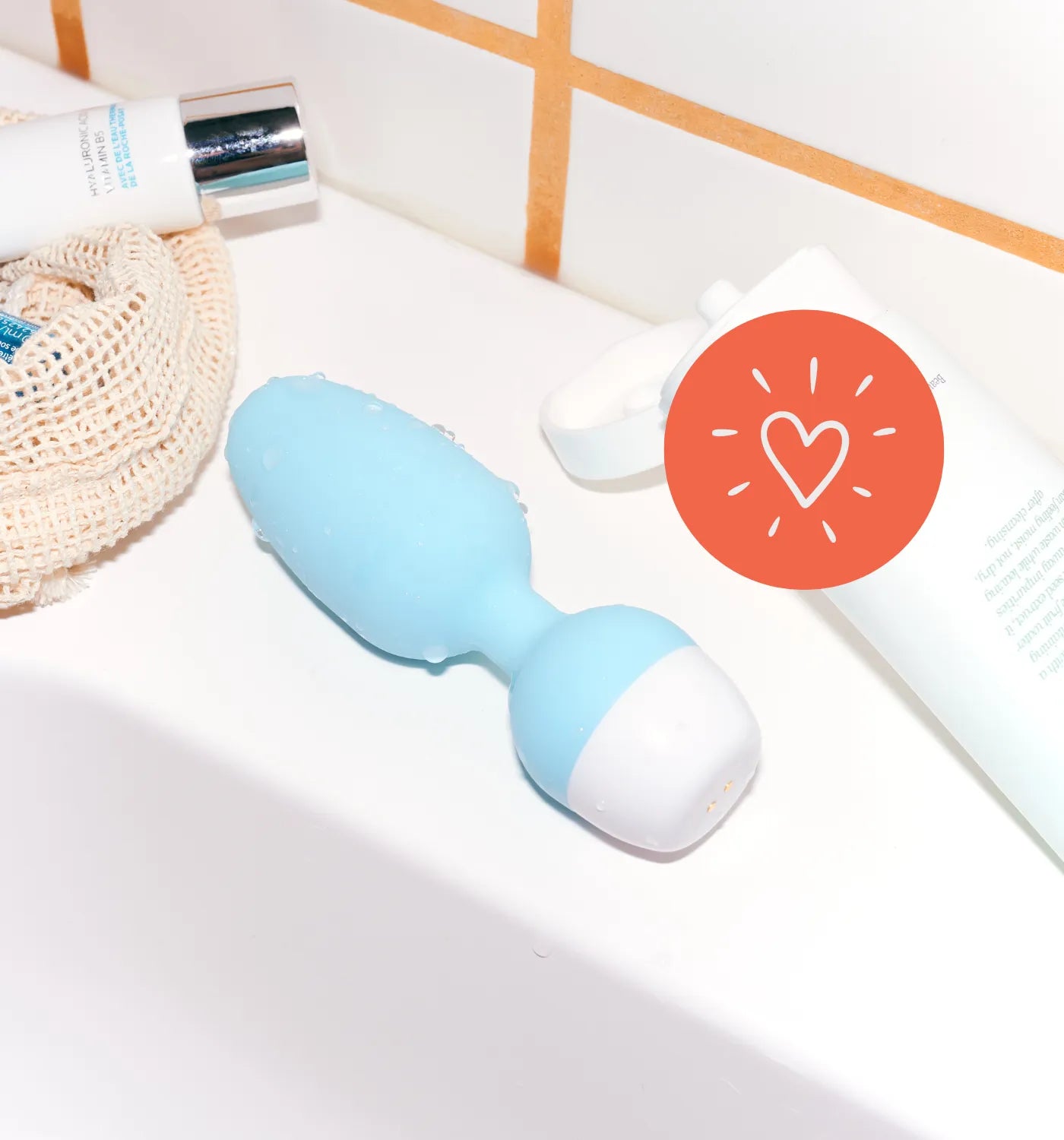
The Emy solution is made up of a mobile app and a connected intravaginal probe, to let you work your pelvic floor with complete ease from home.
Emy Trainer is a medical device whose effectiveness is clinically proven. According to users, their symptoms are relieved from 3 weeks of use.
Its smart app offers you playful exercises (such as launching a rocket, throwing darts…) that you control with your pelvic floor! The big bonus? The exercises adapt to your level and are based on medical protocols.
The Emy probe records your contractions thanks to a patented technology, to let you track your progress easily. It also works without electrical stimuli, but through the well-established biofeedback approach, so you can see your contractions, your level and your progress live on your smartphone, and thus simply follow how you are developing.

So if you have low back pain linked to a prolapse, do not overlook the importance of your pelvic floor! Pelvic floor rehabilitation could be beneficial for your symptoms.
How can back pain be avoided?
Low back pain can arise following a prolapse, but not only. Back pain can arise from a wrong movement, poor posture, overuse and so on. It can be very useful to take a few minutes to analyse the pain:
- Does it come more in the morning? at night? in the evening, after a day's work?
- Is it triggered by a particular movement? A specific posture?
- Is it improved by massage? Heat? A stretch?
These indications will let you identify what triggers the pain and what calms it. And if you have the slightest doubt, or if the pain does not go away, you can contact a healthcare professional who will be able to assess your low back pain and propose a suitable treatment.

In every case, the back loves and needs movement! You should of course avoid the movements and ranges that wake the pain, but the worst thing is to stop moving altogether. Let us not forget that the word "physiotherapy" (French kinésithérapie) comes from the Greek and means "to heal through movement".
The sports we can recommend are gentle sports such as walking, swimming, gymnastics and roller skating; you can also try yoga or Pilates.
Sources
- Prospective evaluation of the connected biofeedback EMY Kegel trainer in the management of stress urinary incontinence, Jochum F et al., February 2022, Journal of Gynecology Obstetrics and Human Reproduction 51(2):102280 – link
- Lombalgie commune : un enjeu de santé publique, l’Assurance Maladie (Ameli.fr), 2024, Dossier professionnels de santé – link


