




Also known as the pelvic floor, the pelvic floor plays a vital role in our everyday comfort. It is therefore important to build a strong, functional pelvic floor, able to cope with the demands of daily life. Because yes, even though it is invisible, the pelvic floor is a set of muscles. And like the other muscles in the body, it only needs to be trained! So which are the sports to choose to strengthen your pelvic floor? Which ones should you avoid? And what are the right habits to adopt? We tell you everything!
- Sports to choose: Brisk walking, swimming, and Pilates are your best allies to strengthen and tone your deep muscles safely.
- Sports and activities to avoid: High-impact activities create harmful abdominal pressure that can cause stress urinary incontinence or, in the most severe cases, pelvic organ prolapse.
- Training at home: Train your pelvic floor at home and track your progress easily thanks to the Emy Trainer pelvic floor trainer.
Which sports are good for strengthening the pelvic floor?
The pelvic floor is a small hammock located between the pubis and the coccyx that helps support our reproductive organs and viscera. But because it is often put under strain, it can eventually weaken and cause many problems: urine leakage, pelvic organ prolapse, reduced sexual pleasure...
Choose gentle sports to strengthen your pelvic floor
To protect your pelvic floor and support strengthening, it is recommended to do gentle sports. In other words, low-impact sports, where your muscles and joints are not put under strain by “shocks”.
Skip the jumps and sudden movements... You will slow down, pay particular attention to your alignment and to how you perform your movements so you can be as effective as possible.
By training this way, you will activate and strengthen the deep muscles of the body. In other words, all the muscles involved in stance and posture, which have a mainly stabilising role, unlike so-called “superficial” muscles (biceps, quadriceps...).
Learn more about my pelvic floor
But don’t worry, gentle doesn’t mean easy! With this kind of sport, you can still work hard, get your cardiovascular system going and even sweat!
4 “pelvic-floor-friendly” sports
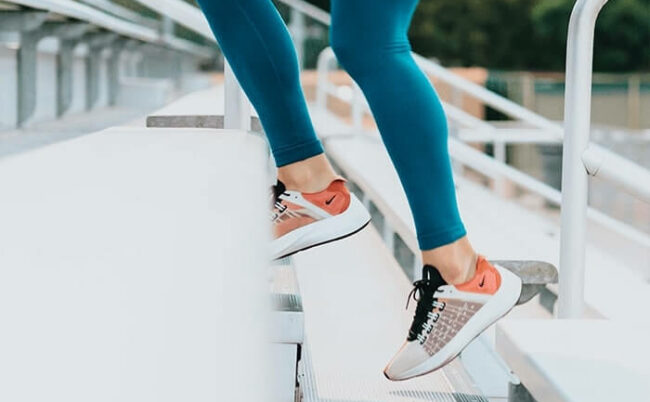
Walking to strengthen your pelvic floor
Simple, effective and incredibly easy to fit into your routine, walking is an excellent sport for strengthening your pelvic floor. No need to do a marathon — 20/30 minutes of walking a day will already let you feel the benefits
Our tip: try to keep a fairly brisk pace, with slightly longer strides to work your leg and pelvic muscles more.
But be careful, your activity should remain gentle!
Pilates to tone your pelvic floor
The benefits of Pilates for the body and health are numerous. It is also THE number one sport to look after and tone your pelvic floor.
Why? Because this gentle exercise helps you work on posture, breathing and engaging your deep muscles. In short, everything that helps support strengthening.
In practice, before (and during) each exercise, you need to engage your pelvic floor with a voluntary contraction. You should then feel your pelvic organs lift towards your navel. Even if, at first, this may seem unclear or you are not sure you are feeling the right things... Don’t panic!
As the training sessions go by, you will feel more and more comfortable and you will truly become aware of the full extent of this invisible set of muscles.
In time, this voluntary contraction will become a reflex, supporting you in your other sports activities as well as everyday life, during any effort.
Swimming to strengthen your muscles
Exercise in water also has many benefits for the pelvic floor. The pressure placed on your muscles and joints is lower, because when you float, your body weighs less.
In water, you carry only a third of your body weight on land. Almost like in zero gravity, your movements are easier and your body is protected from the shocks that the ground could cause.

In general, swimming movements are very effective for toning the muscles of the body. And especially those of the waist and pelvis, because you constantly have to use them to keep your balance and manage resistance while swimming.
Here too, don’t hesitate to do some mindful training by voluntarily contracting your pelvic floor from time to time to strengthen it.
Another benefit: swimming is a sport accessible to everyone. Whatever your weight, age, or fitness level, there are very few contraindications to this activity.
Cycling, a pelvic-floor-friendly sport
The sitting position on a bike is a perfect ally for the well-being of your pelvic floor. The pelvic muscles are supported by the saddle and feel less pressure while you pedal.
By working your coordination and balance, cycling particularly engages the deep muscles of the abdominal core and therefore supports pelvic floor strengthening.
But here again, we are not talking about a very intense practice. That could have the opposite effect by creating jolts and, in time, be harmful to the pelvic floor.
Also pay attention to your posture! If you distribute effort poorly between the upper and lower body, compensation patterns can develop and you won’t benefit from the advantages of this sport.
Pelvic floor: which sports should you avoid?
As you can see, some activities can also put strain on your pelvic floor. To preserve your pelvic floor as much as possible, you should avoid impact sports when strengthening your pelvic floor. They involve jumps such as:
- Jump rope;
- Running;
- Athletics;
- Handball;
- Trampoline;
- CrossFit...
With every impact, your organs are pushed downward. As a result, they create additional pressure on your pelvic floor, which can eventually weaken it. But don’t worry, you don’t have to give up all of these sports either!
To do them safely, you need to pay attention to adopting the right posture and the right habits. For example, by contracting your pelvic floor before each effort to protect it.
How can you protect your pelvic floor when you exercise?
Train your pelvic floor regularly
Protecting your pelvic floor starts with being aware of it and getting to know it well: knowing how to contract it, how to relax it, how to control it...
Kegel exercises are an excellent way to strengthen your pelvic floor. They involve a sequence of contracting and relaxing the pelvic floor, to be practised regularly.

Pelvic floor training is also an excellent option. It can be done with a healthcare professional or at home. There are also many pelvic floor training exercises to do at home, with or without equipment.
Another effective way to strengthen your pelvic floor at home is to use a smart pelvic floor trainer with biofeedback, such as the Emy Trainer device.
This technology lets you see your pelvic-floor contractions in real time on your smartphone. And above all, one of its biggest advantages is that you can track your progress and changes over time.
Adopt a healthy lifestyle
When it comes to the pelvic floor, not everyone is in the same boat. In fact, many factors affect pelvic floor tone. Some can be acted on, others cannot.
Non-modifiable factors
Among the non-modifiable factors that affect our pelvic floor, you can include for example:
- age and the natural ageing of tissues;
- medical history;
- genetics and heredity;
- pregnancy and childbirth...
It is fairly easy to understand why it is not possible to fight against all of these factors and the effects they have on our pelvic floor.
Fortunately, there are other modifiable elements you can act on to protect your pelvic floor.
Modifiable factors
There are also other so-called modifiable factors that play a role in the pelvic muscles. Unlike non-modifiable factors, these are elements we can control, adapt, or manage.
These include, among others:;
- smoking;
- overweight;
- the sport you do;
- diet;
- hydration...
Adopting a healthy lifestyle is therefore one of the best tips if you want to protect your pelvic floor while exercising!
Adapt your sport to your condition
Finally, to protect your pelvic floor when you exercise, it is important to have a sporting practice suited to your level. This includes the choice of sport, training load and training intensity. You may need to start gently and increase gradually.
And above all, if you suffer from urine leakage during exercise, don’t give up. Above all, remember that you are not alone. More than 1 in 2 women athletes suffer from incontinence! You simply need to adapt your sport and apply a few basic tips such as staying well hydrated.
Some women, for example, insert a pessary into the vagina before sport and remove it afterwards. This helps temporarily prevent some leaks and may be an option to consider in the short term.
In the longer term, the most effective solution to prevent urine leakage during sport will always be to strengthen your pelvic floor.
Advice from sports coach Lucile Woodward
A certified sports coach, this article is written in collaboration with Lucile Woodward. She has also trained in micronutrition so she can support her clients and community in the day-to-day practice of sport and advise them on a varied, balanced diet.
Since 2017, she has been sharing her Body By Lucile method as well as all her tips through YouTube videos, a channel followed by more than 660,000 people, and on her blog and social media.

Finally, Lucile Woodward’s main activity is creating sports and nutrition programmes to help men and women achieve practical, overall well-being. Gentle and supportive methods!
Among her programmes, you can find “strengthen your pelvic floor”. It is a very comprehensive programme that perfectly supports pelvic floor protection and strengthening.
What you need to remember from this article
- Choose gentle physical activities: Brisk walking, swimming, or Pilates help tone the muscles of your pelvis while avoiding micro-trauma to your joints.
- Squeeze your pelvic floor before each effort: Remember to breathe out through your mouth as you contract your pelvic floor just before making an intense movement or lifting a heavy load to help prevent leakage.
-
Train your pelvic floor at home with Emy Trainer: Using our pelvic floor trainer lets you track your progress in real time thanks to biofeedback, so you can train easily and achieve long-lasting results.
For a full overview of strengthening solutions and available treatments, read our complete guide to pelvic floor training for women"
Sources:
- Prospective evaluation of the connected biofeedback EMY Kegel trainer in the management of stress urinary incontinence, Jochum F et al., February 2022, Journal of Gynecology Obstetrics and Human Reproduction 51(2):102280. - link
- Pelvic Floor Muscle Rehabilitation Using Biofeedback, Diane Kaschak Newman, July 2014, Urologic Nursing 34(4):193-202. - link
- Female genital prolapse: therapeutic management, Haute Autorité de Santé (HAS), May 2021, Good practice recommendations. - link