







L'stress urinary incontinence is a very common pathology among women. It affects more than 6.5 million women, just in France!
However, the urinary leakage exercise are still taboo. But fortunately, they are not inevitable and solutions exist !
Stress urinary incontinence
Who is affected?
Stress urinary incontinence is the type of incontinence most frequently encountered in the female population.
Effort leaks can affect all women, no matter their age. But the risk still increases the older the woman gets. Approximately 1 in 5 women over 40 years old will suffer from stress urinary incontinence.
How is stress incontinence characterized?
This pathology is characterized by leaking urine, which can be more or less important, at the time of a effort. This can be a sports physical effort, as simply a effort of daily life (sneezing, coughing, carrying a heavy load, changing position, etc.).
During stress incontinence, there is no no need or feeling to urinate which is felt.
Cough, sworn enemy of the perineum
During exercise, when we cough or sneeze for example, the abdominals exert a strong pressure on the perineum. With excessively repetitive coughing or frequent sneezing, if the perineum is weakened, the risk of urinary leakage is even more important.
In addition, repeated efforts weaken the pelvic muscles. They are involved in the closure of the urethral canal which regulates the bladder function. So if the perineum is too relaxed, during effort, it can no longer perform its role and leaking urine can then appear.

What are the other types of incontinence?
There are two other types of incontinence. On the one hand, theurinary incontinence by imperiousness which is characterized by an urgent and uncontrollable need to urinate, regardless of effort.
And on the other hand, the imixed urinary continence which combines the two forms of incontinence: stress and mixed.
Risk factors for stress incontinence
Many risk factors promote the appearance of stress urinary incontinence such as:
- age (from 65 years old the risk is multiplied by 2.5);
- pregnancy and childbirth;
- menopause;
- overweight;
- constipation;
- organ descent;
- smoking;
- practicing an impact sport…
How to treat stress urinary incontinence?
To avoid the inconvenience linked to urinary incontinence, there are many solutions. There perineal rehabilitation is one of the most effective solutions.

Tone your perineum through rehabilitation
The aim of the rehabilitation sessions is to strengthen the muscles of the perineum. With a more toned perineum, you will avoid finding yourself with wet panties at the first sneeze or because of a coughing fit.
To do this, there are several perineal rehabilitation methods to build muscle pelvic floor.
Electrostimulation to re-educate your pelvic floor
Electrostimulation is a technology that sends light electric currents diffused by a vaginal probe to strengthen the perineum. In this case, you do not have to make any effort because it is the probe that works for you.

This technique can be useful to you if you do not know how to contract your perineum correctly. During these sessions, you remain passive by letting the electric current stimulate the pelvic floor.
Biofeedback to strengthen your perineum
THE biofeedback allows you to measure the strength of the perineal muscles using a vaginal probe equipped with sensors to better detect your contractions and the pressure exerted on the probe.

With this technique, you are told when to contract and when to relax your perineum. During the exercises, you are active because it is you who decides to contract your muscles. Biofeedback allows you to visualize your efforts in real time.
Perineal rehabilitation at home
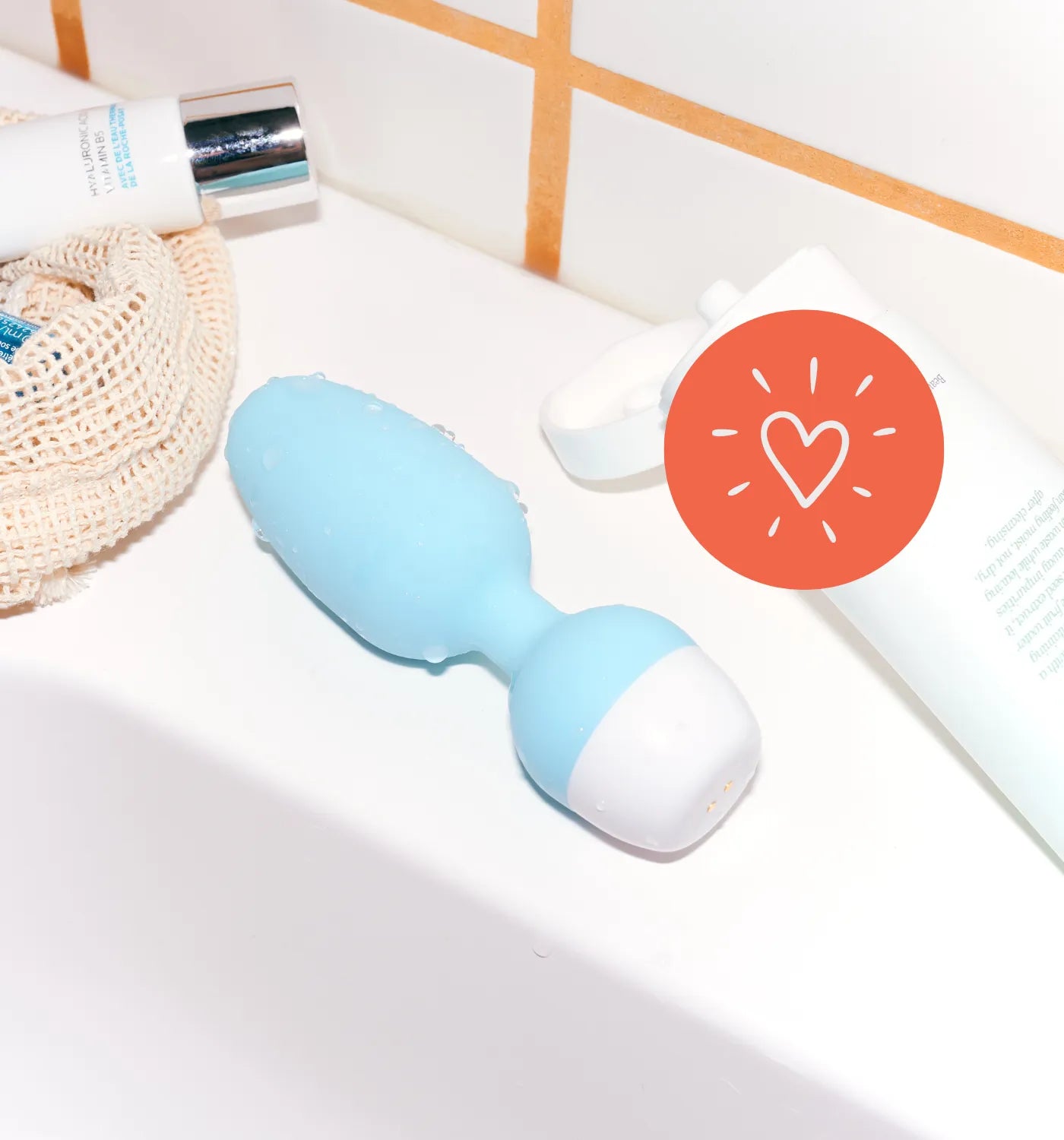
Emeline Hahn has developed a biofeedback solution for the home: the Emy probe. This medical device allows all women to do their perineal rehabilitation at home with an effective solution for fight against stress urinary incontinence.
In this video, she explains the differences between electrostimulation and biofeedback.
Fight against stress incontinence with Emy
There Emy perineal probe uses technology biofeedback. The probe is connected to a mobile application which offers you more 30 fun exercises distributed in different game world.

You row the canoe, turn a Ferris wheel, take off a rocket... and all this, only thanks to the strength of your perineum !
Exercises for stress urinary incontinence
Behind these mini-games are actually hidden medical protocols. The exercises allow you to perform a competitive training of your pelvic floor, not even 5 minutes. You will work on different types of muscle contraction:
- repeated
- fast
- long to maintain over time
The advantage of biofeedback is that you can track your progress directly in the application. You will therefore quickly know in which area you need to improve.
Learn more about the Emy probe
And if you are not (yet) convinced of the interest, here is 5 good reasons to use a perineal biofeedback probe !
Sports practice to tone your perineum
To strengthen your perineum, you can also simply do sports. But be careful, not all types of sports are beneficial for the perineum.
While some sports go press on your abdomen and exert force on your perineum, other physical activities can, on the contrary, help him strengthen it. This is the case for swimming, cycling or even yoga or Pilates which will not exert too much pressure on the pelvic muscles.
In any case, pay close attention to protect your perineum during sports practice and lock on effort.
And if you suffer from urinary leakage during sports, quickly discover our article on the subject and all our advice for a peaceful practice.


